Summary:
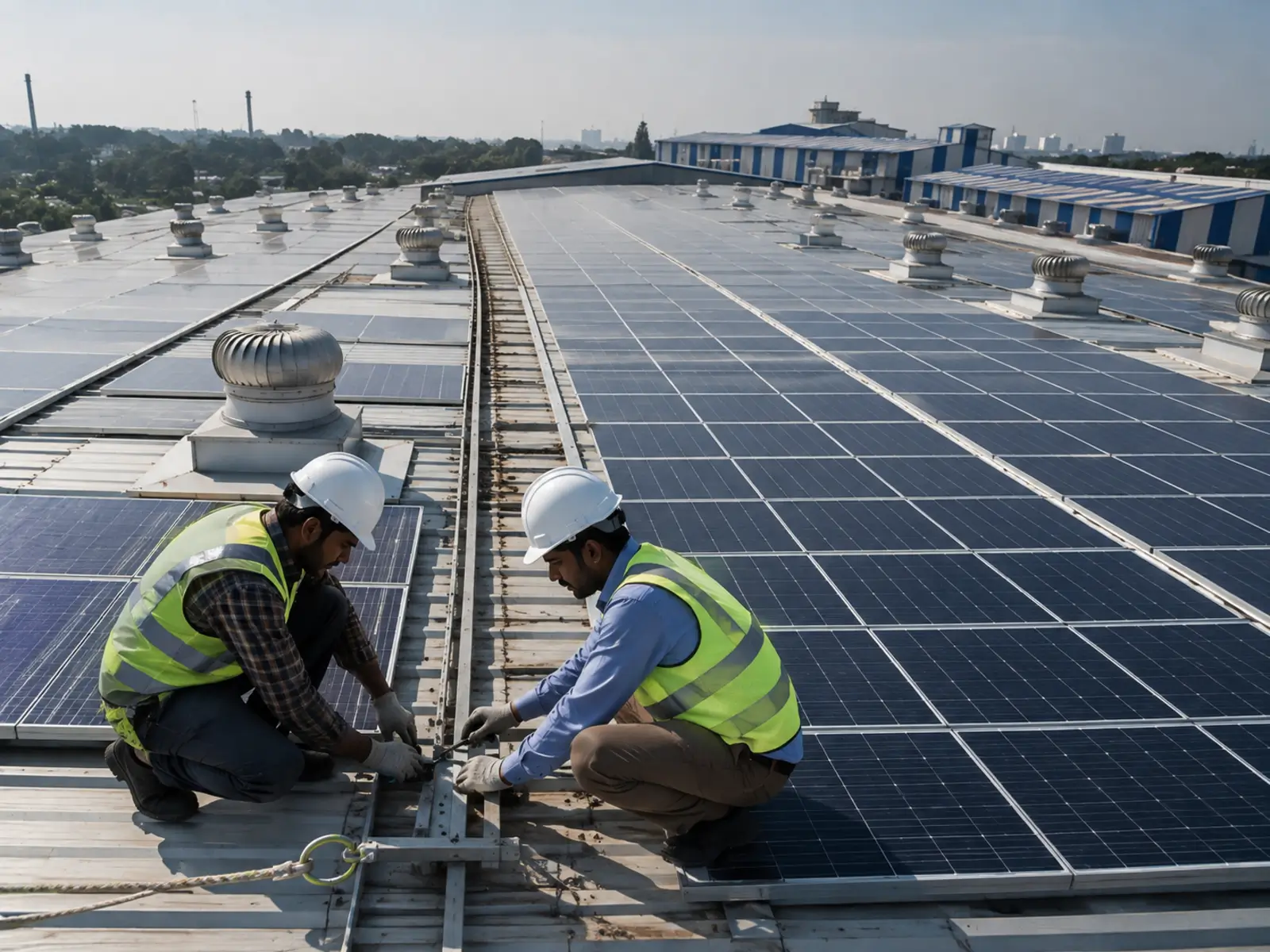
As energy costs rise, Indian businesses are turning to solar as a smart long-term investment. This blog breaks down commercial and industrial solar power installation in India, covering real costs, ROI timelines, system performance, and what decision-makers need to know before switching to solar with confidence.
Introduction
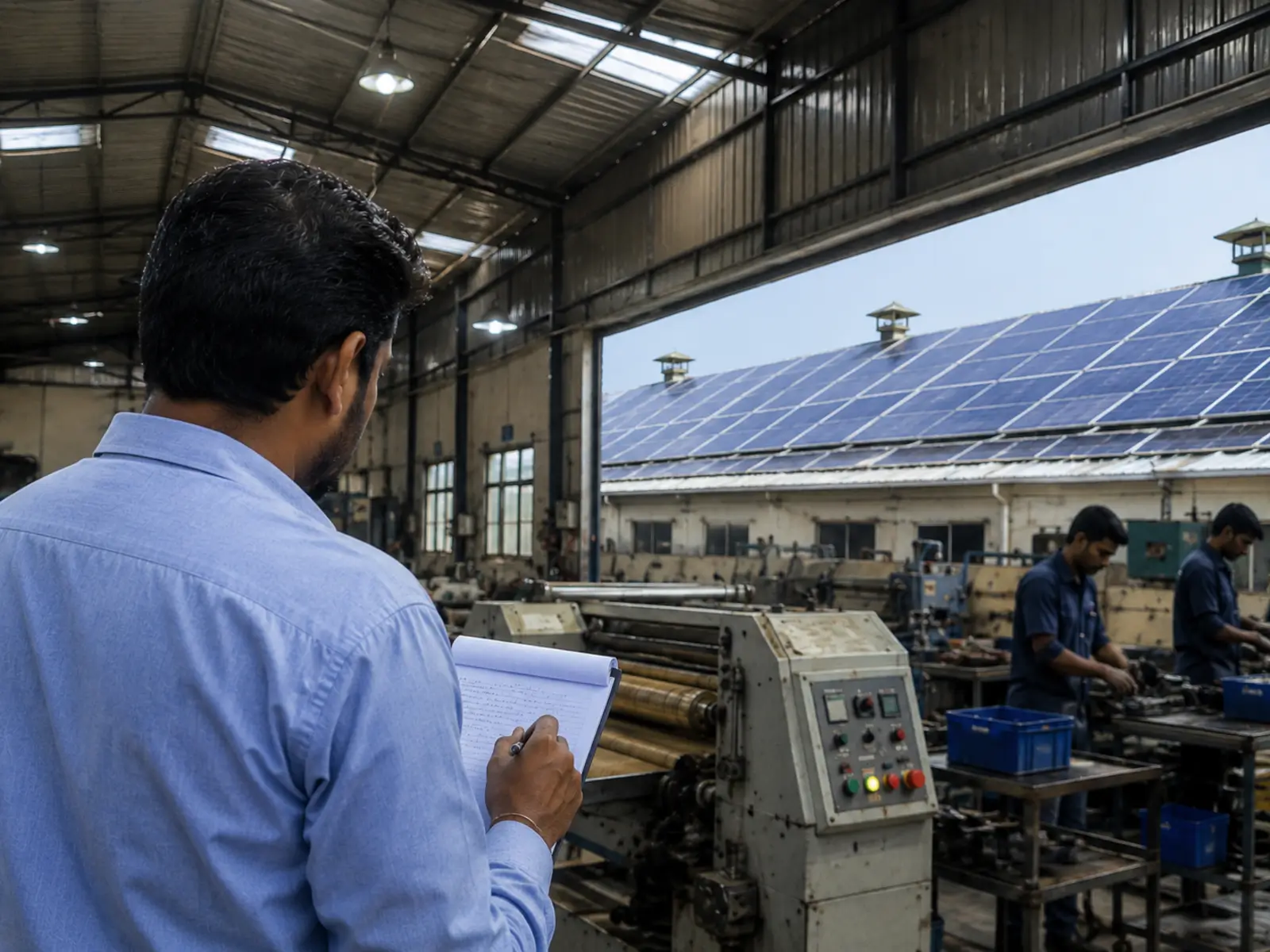
For industries evaluating solar energy, the most important question is not whether solar works, but how quickly it delivers returns. Commercial solar power installation is a capital investment, and without accurate ROI calculation, even a well-built system can underperform financially.
Today, businesses are shifting from rough assumptions to data-backed ROI models before committing to industrial solar power installation. Accurate forecasting helps industries understand payback timelines, long-term savings, and financial viability before installation. This blog explains how commercial solar power plant ROI is calculated, what factors influence payback, and how industries can estimate returns with clarity and confidence.
What ROI Means in Commercial Solar Projects
Return on Investment (ROI) in commercial solar power installation measures how efficiently a solar plant recovers its upfront cost and generates savings over its lifetime. It answers two critical business questions: how soon the investment pays back and how profitable the system will be over time.
For industrial solar power installation, ROI becomes even more important because of high energy consumption and operational dependency. A correctly calculated ROI ensures solar is treated as a strategic financial decision, not just a sustainability initiative.
Core Factors That Influence Solar ROI
Solar ROI is determined by multiple variables working together. Each factor directly affects how fast and how reliably a business recovers its investment.
System Cost
This includes panels, inverters, mounting structures, installation, approvals, and commissioning. Larger industrial solar power installation projects often benefit from lower per-kilowatt costs due to scale.
Electricity Tariff Offset
The higher the existing grid tariff, the greater the savings from commercial solar power installation. Solar replaces expensive daytime electricity with self-generated power.
Annual Energy Generation
Energy output depends on location, irradiance, panel efficiency, and system design. Higher generation directly improves ROI.
Self-Consumption Ratio
ROI increases when most of the generated solar power is consumed on-site. Excess export typically delivers lower financial returns than direct consumption.
Step-by-Step: How Industries Calculate Solar ROI Before Installation
Accurate ROI estimation follows a structured financial and technical process.
- Energy Consumption Analysis
Industries analyse 12 to 24 months of electricity bills to understand peak demand, base load, and seasonal variations. This forms the foundation of commercial solar power installation planning. - Optimal System Sizing
Correct sizing prevents losses. Oversized systems reduce ROI through unused energy, while undersized systems limit savings. Industrial solar power installation must align with shift schedules and production cycles. - Annual Generation Estimation
Using solar irradiance data and simulation tools, expected yearly energy generation is calculated. - Annual Savings Calculation
Annual savings are derived by multiplying estimated energy generation with the applicable electricity tariff. - Payback Period Estimation
Payback period is calculated by dividing total system cost by annual savings. In India, most commercial solar power installation projects achieve payback within 3 to 5 years.
Understanding IRR and Long-Term Financial Returns
While payback period indicates recovery speed, Internal Rate of Return (IRR) reflects profitability. For industrial solar power installation, IRRs typically range between 18% and 25%, outperforming many traditional investments.
With a system lifespan of 25 years or more, businesses continue to benefit from near-zero energy costs long after payback. This makes solar a stable, long-term infrastructure asset.
What Improves or Reduces Solar ROI
Solar ROI is highly predictable when planned with precision, especially in commercial solar power installation projects where energy usage patterns are consistent and measurable. ROI improves significantly when businesses operate during daytime hours, allowing maximum self-consumption of generated power. An optimised system design and layout ensure panels capture maximum sunlight without shading losses, while high-quality components with lower degradation rates protect long-term output.
On the other hand, ROI can weaken when industrial solar power installation is rushed without accurate load assessment or future demand planning. Structural constraints, partial shading, or poorly aligned layouts reduce generation potential, while inverter mismatches can cause energy losses during peak production.
Why Pre-Installation ROI Accuracy Matters
Many businesses assess ROI after installation, which limits corrective action. Accurate ROI estimation before installation helps industries secure internal approvals, compare solar with other capital investments, and avoid overcapitalisation.
For industrial solar power installation, pre-installation ROI clarity also ensures energy generation aligns with operational demand, preventing production disruptions and financial inefficiencies.
Comparing Solar ROI With Grid Power Costs
Grid electricity tariffs increase year after year, while solar energy costs remain stable. ROI calculations that factor tariff escalation show how commercial solar power installation consistently outperforms grid dependency over time.
When calculated correctly, solar delivers predictable returns with minimal operational risk and no fuel volatility.
Conclusion
Commercial solar power plant ROI calculation is not guesswork; it is a structured financial exercise that determines the success of a solar investment. By analysing consumption patterns, sizing systems accurately, and forecasting savings realistically, industries can estimate payback with confidence before installation.
For businesses planning commercial solar power installation or industrial solar power installation, accurate ROI modelling turns solar into a long-term financial asset. When done right, solar doesn’t just reduce energy costs, it delivers stable returns, operational resilience, and measurable business value for decades.