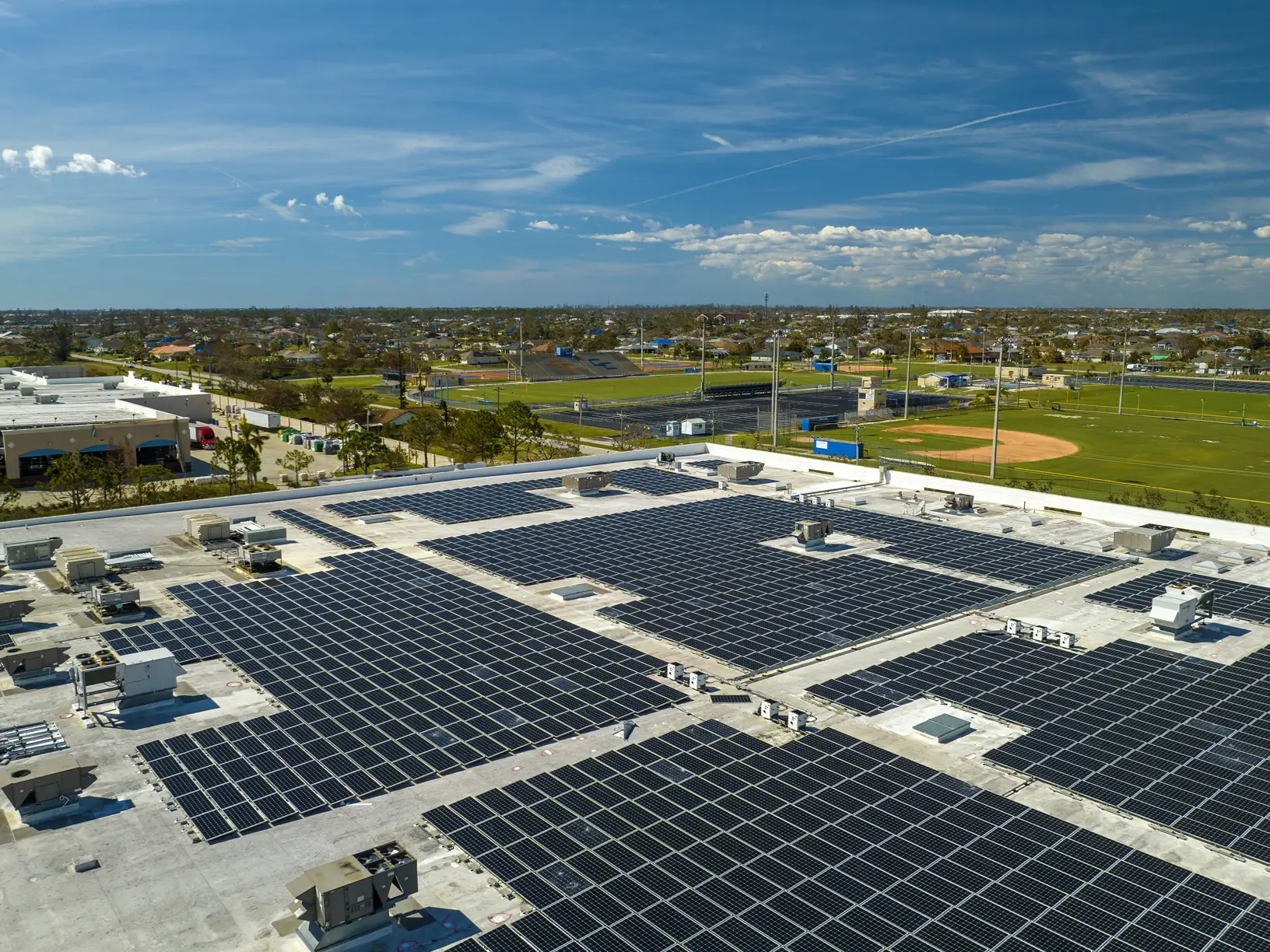
Introduction
Here’s a number worth thinking about. Studies by the National Renewable Energy Laboratory show that poorly planned solar installations underperform by up to 30 percent compared to well engineered ones. That gap between promise and performance is exactly where most businesses lose money on their solar investment. A commercial solar EPC process, when done right, eliminates that gap entirely. EPC stands for Engineering, Procurement, and Construction. It covers every stage of a solar project from the first site visit to the final panel on the rooftop. In this blog, you will learn exactly how Energium’s EPC process is structured, why each phase exists, and how it delivers returns that hold up not just in year one but across 25 years of operation.
What Is a Commercial Solar EPC Process and Why Does It Matter?
A commercial solar EPC process is the end to end framework that governs how a rooftop solar installation is planned, sourced, and executed. It matters because the quality of this process determines the quality of every number your installation will ever produce.
Most underperforming installations share one thing in common. The EPC process was rushed. Shading was not analysed. Structural loads were not evaluated. Component selection was based on availability rather than site specific performance data. The result is a system that works on paper but falls short in practice.
Energium’s approach to commercial solar EPC starts long before any physical work begins. Every project is treated as an engineering problem first, which means data collection, simulation, and validation all happen before procurement or construction is even considered.
How Does Energium’s Engineering Phase Strengthen Solar Performance?
The engineering phase is where the real work happens. Before a single component is ordered, Energium conducts a thorough site evaluation covering rooftop structure, orientation, shading patterns, and energy consumption history. This is not a visual inspection. It uses SketchUp Pro for three dimensional rooftop modelling and PVsyst for generation simulation and performance forecasting.
According to the Solar Energy Industries Association, simulation based design can improve system output accuracy by up to 20 percent compared to installations planned without software validation. For a 200 kW installation, that difference can mean thousands of additional units generated every single month.
The engineering phase also includes a financial feasibility check. If the numbers do not work for a client’s facility, Energium says so before any money is committed. You can explore how this honest assessment approach works across our commercial rooftop solar service in detail.
What Makes Energium’s Procurement Strategy Different in Commercial Solar EPC?
Procurement is where many EPC providers cut corners. Generic components sourced for cost rather than compatibility often create performance mismatches that reduce output and accelerate degradation.
Energium does not manufacture components. Every panel and inverter is selected based on the specific site conditions, load profile, and performance requirements identified during the engineering phase. Tier-1 panels with verified specifications are matched to the rooftop’s orientation and shading conditions. Inverters are selected based on the facility’s load behaviour and future expansion potential.
This site specific procurement approach ensures that every component works as part of a designed system rather than as an off the shelf installation. The result is a commercial solar EPC outcome where the installed capacity actually delivers what the simulation projected.
How Does the Construction Phase Protect Long Term Commercial Solar Returns?
Construction quality determines how long a system performs at its designed capacity. Energium’s construction phase follows strict quality checks at every stage, from structural mounting to electrical connections and final commissioning.
Before any panel reaches the rooftop, every module undergoes Voc (open circuit voltage) testing on site. This step, which most EPC providers skip entirely, identifies underspecification panels before they are installed. Faulty modules are documented and replaced with certified alternatives.
Safety infrastructure is also engineered into every installation. Custom safety grids are designed for each rooftop based on structural load analysis, ensuring worker safety during installation and long term panel stability after commissioning.
Why Does Post Installation Monitoring Complete the Commercial Solar EPC Cycle?
A commercial solar EPC process does not end at commissioning. Real returns require ongoing visibility into system performance. Energium’s IoT based real time monitoring tracks energy generation, system health, and performance trends daily.
This visibility serves two purposes. It gives clients complete transparency into their investment’s performance. And it allows the Energium team to identify any output deviations early, before small issues compound into significant losses. Industry experts consistently highlight that monitored installations outperform unmonitored ones by 10 to 15 percent over their lifetime simply because issues are caught and resolved faster.
If you want to understand how much your facility could generate and save, our Solar Calculator gives you a data backed starting point before any commitment is made.
What Results Can Businesses Expect From a Well Executed Commercial Solar EPC Process?
The numbers speak clearly. A correctly engineered and executed commercial solar EPC project for an industrial facility in Tamil Nadu typically delivers a return on investment of 25 to 27 percent, with full investment recovery within 3.5 to 5 years. After payback, the facility generates power at near zero cost for the remaining 20 plus years of the system’s lifespan.
These are not optimistic projections. They are outcomes that come from getting the EPC process right from day one. You can read about real project results across our completed installations to see how engineering led execution translates into measurable financial outcomes for industrial and commercial clients.
Conclusion
A commercial solar EPC process is the single biggest determinant of whether a rooftop installation delivers on its promise or falls short of it. When engineering leads every decision, procurement follows site specific data, construction meets strict quality standards, and monitoring tracks every watt generated, the result is a system that performs exactly as designed for decades. That is the Energium standard on every project. If you are evaluating a rooftop solar investment for your industrial or commercial facility, start by understanding the EPC process behind it. Explore our industrial rooftop solar service or reach out through our contact page to begin a conversation backed by engineering, not assumptions.