Introduction
A business owner once signed a solar contract within a week of getting a quote, only to spend the next eight months fighting delays, missing approvals, and a plant that generated 18% less than promised. That story repeats across South India more often than it should. A proper commercial solar EPC checklist exists precisely to prevent this, and it covers far more than panel brand and price.
In this guide, you’ll get a complete, stage-by-stage checklist for vetting any EPC partner before signing, so your rooftop project avoids the delays, disputes, and underperformance that derail so many commercial installations.
What Should an EPC Checklist for Commercial Rooftop Solar Projects Include?
An EPC checklist for commercial rooftop solar projects should cover site audit, design and engineering, component sourcing, statutory approvals, installation quality, and post-commissioning support. Each stage carries its own risks, and skipping verification at any single point can quietly undermine your entire investment. Think of it less as a formality and more as a filter that separates serious EPC firms from quick-quote vendors.
Consider a spinning mill that almost signed with a vendor offering the lowest price in the market. A closer look revealed the quote excluded statutory approval costs and structural audit entirely, expenses that surfaced later as extras. That’s exactly the kind of gap a proper checklist catches before contracts get signed.
Has the EPC Firm Conducted a Proper Site Audit?
A genuine site audit measures rooftop structural load capacity, shading across seasons, and your real electricity consumption pattern, not estimated figures from a satellite image. Without this step, system sizing becomes guesswork, and guesswork rarely produces accurate ROI numbers.
Ask specifically whether the audit included a physical site visit, structural assessment, and load study reviewing your actual electricity bills. Energium builds this directly into its Commercial Rooftop Solar process, treating the audit as the foundation every later decision depends on.
Does the Design Phase Use Simulation, Not Guesswork?
Engineering-grade design uses software simulation to model panel layout, string configuration, and shading loss specific to your rooftop’s geometry. Generic layouts copied across multiple sites almost always leave generation potential on the table.
A weaving unit requested design documentation before signing, and the simulation report revealed a 6% generation gap between two proposed layouts, simply due to string orientation. That single document saved years of lost output. If you’re comparing EPC firms on this front, our guide on How Data-Driven Solar Plant Design Improves ROI explains why this step deserves scrutiny.
Are the Components Tier-1 and Properly Specified?
Tier-1 panels and inverters with verified bankability ratings protect your system’s output for the full 25-year lifespan, while budget components often degrade twice as fast. A trustworthy EPC partner specifies exact panel and inverter models in writing, not vague terms like “premium quality.”
According to the National Institute of Solar Energy, component quality remains one of the leading factors behind long-term generation loss in commercial installations across India. Therefore, request datasheets for every major component before signing, and compare them against what’s actually delivered on-site.
Has the EPC Partner Secured All Statutory Approvals?
Statutory approvals, including CEIG clearance, discom net-metering agreements, and structural certifications, determine whether your plant can legally operate and export power. Missing or delayed approvals can leave a fully built system sitting idle for months.
Imagine a textile facility that completed installation in six weeks but waited another four months for net-metering approval because the paperwork was filed incorrectly. That delay alone postponed savings by an entire season. A capable EPC firm like Energium handles this process end-to-end.
Does Installation Follow Documented Quality Checks?
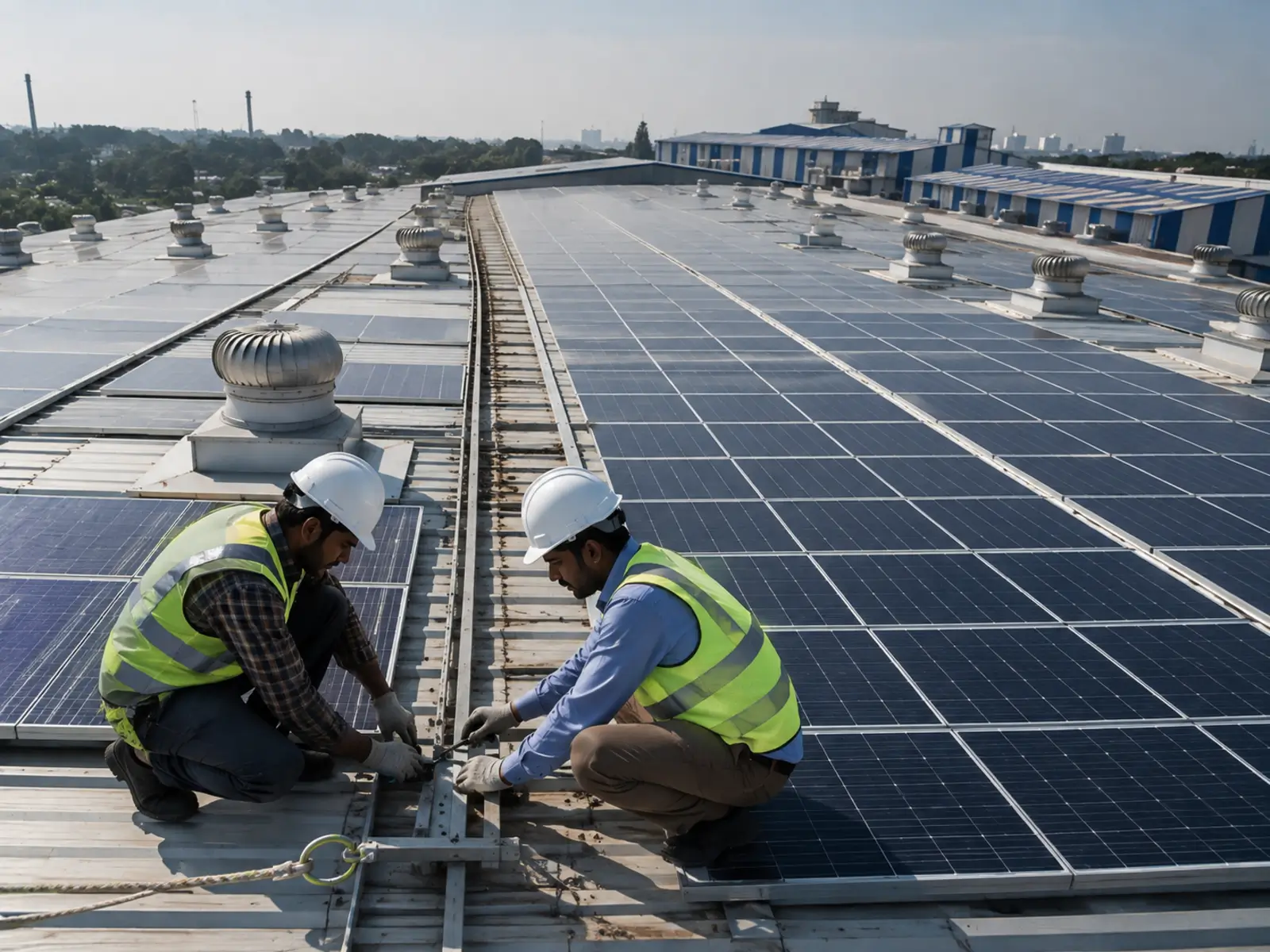
Installation quality determines whether your engineered design actually performs once panels go up. Loose connections, improper earthing, and inconsistent mounting torque create losses that often go undetected until months after commissioning.
A reliable EPC firm follows documented checklists for every cable run, connection, and earthing point, with sign-offs at each stage. Additionally, ask whether your contract includes a formal commissioning report with test results, not just a verbal confirmation that everything’s working fine.
What Happens After Commissioning?
Post-commissioning support, including real-time monitoring and AMC coverage, protects the ROI you’ve already invested in building. Without monitoring, a soiled panel array or a faulty string can silently reduce output for months before anyone notices the drop on the electricity bill.
If your shortlisted EPC firms don’t mention monitoring dashboards or maintenance schedules, that’s a gap worth raising directly. Our comparison of the Top 10 Commercial Solar Power Solution Providers in South India breaks down which providers stay involved after handover and which disappear once the invoice is paid.
Conclusion
A thorough commercial solar EPC checklist protects you from the most common and costly mistakes in rooftop solar, from underpowered audits to skipped approvals to components that degrade faster than promised. Walking through each stage before signing turns a stressful decision into a straightforward one.
Ready to put this checklist into practice? Start with a proper site audit through Energium’s Industrial Rooftop Solar team.