Introduction:
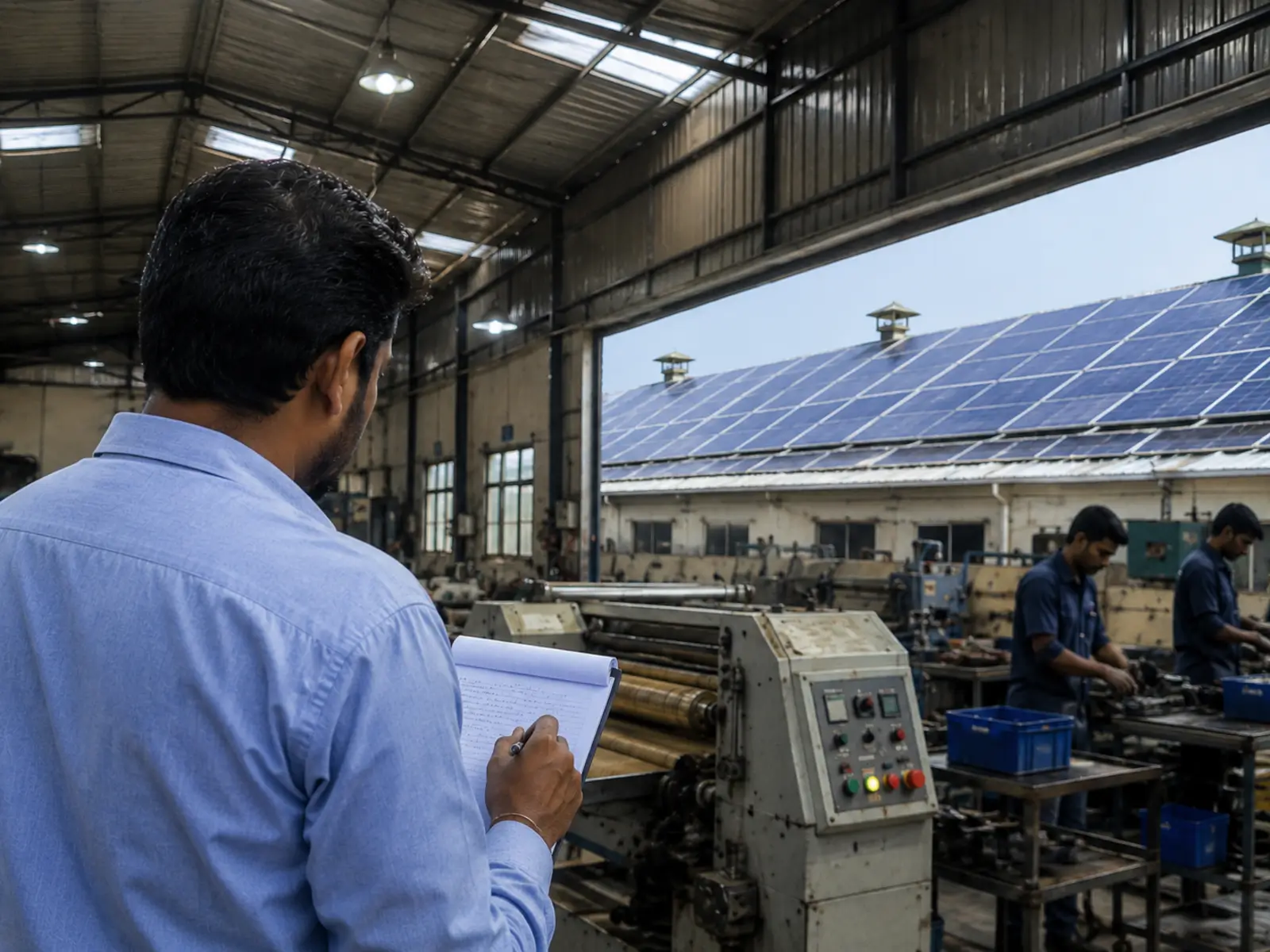
Most solar case studies talk in projections. This one talks about the results. Energium installed a rooftop solar system on a 30-foot-high roof near Erode while the facility kept running full shifts. That’s not a small ask, and it’s exactly where industrial solar power solutions either prove themselves or fall apart.
A 375 kW rooftop system was installed here using a custom crane-lifting approach that avoided manual handling entirely, and the entire module installation was completed in just 3 days with zero damage.
In this guide, you’ll see exactly how commercial solar power solutions get engineered for a live industrial site, and why the planning behind an installation matters more than the panels themselves.
How Did a 375 kW Rooftop System Perform on This Working Facility?
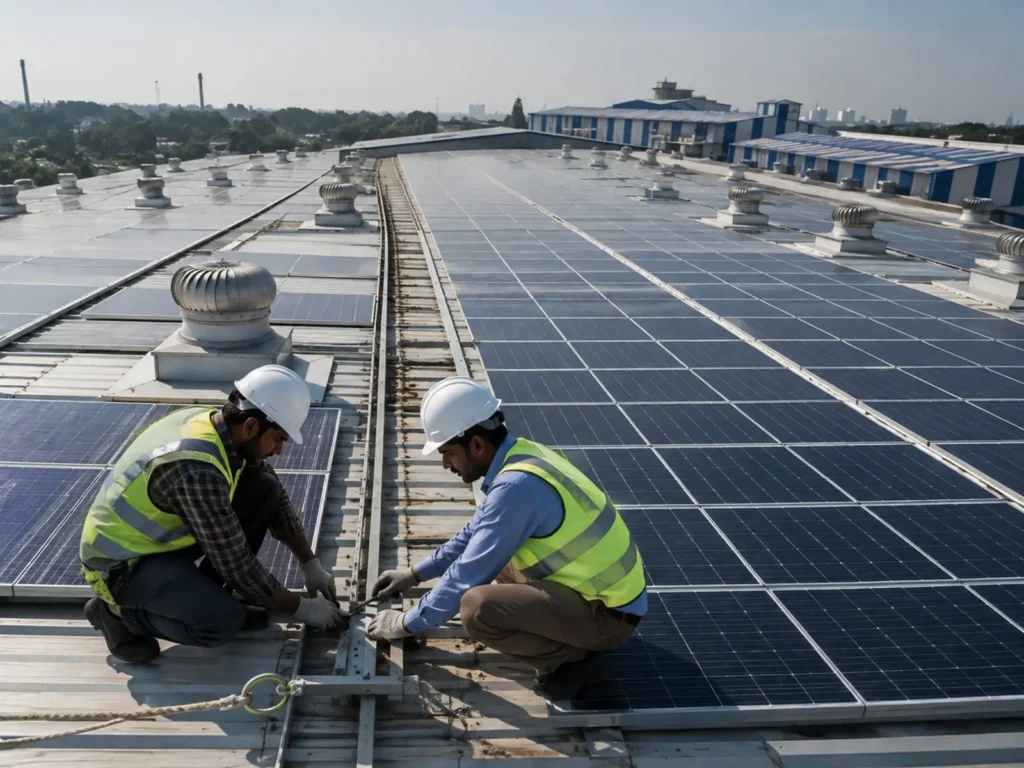
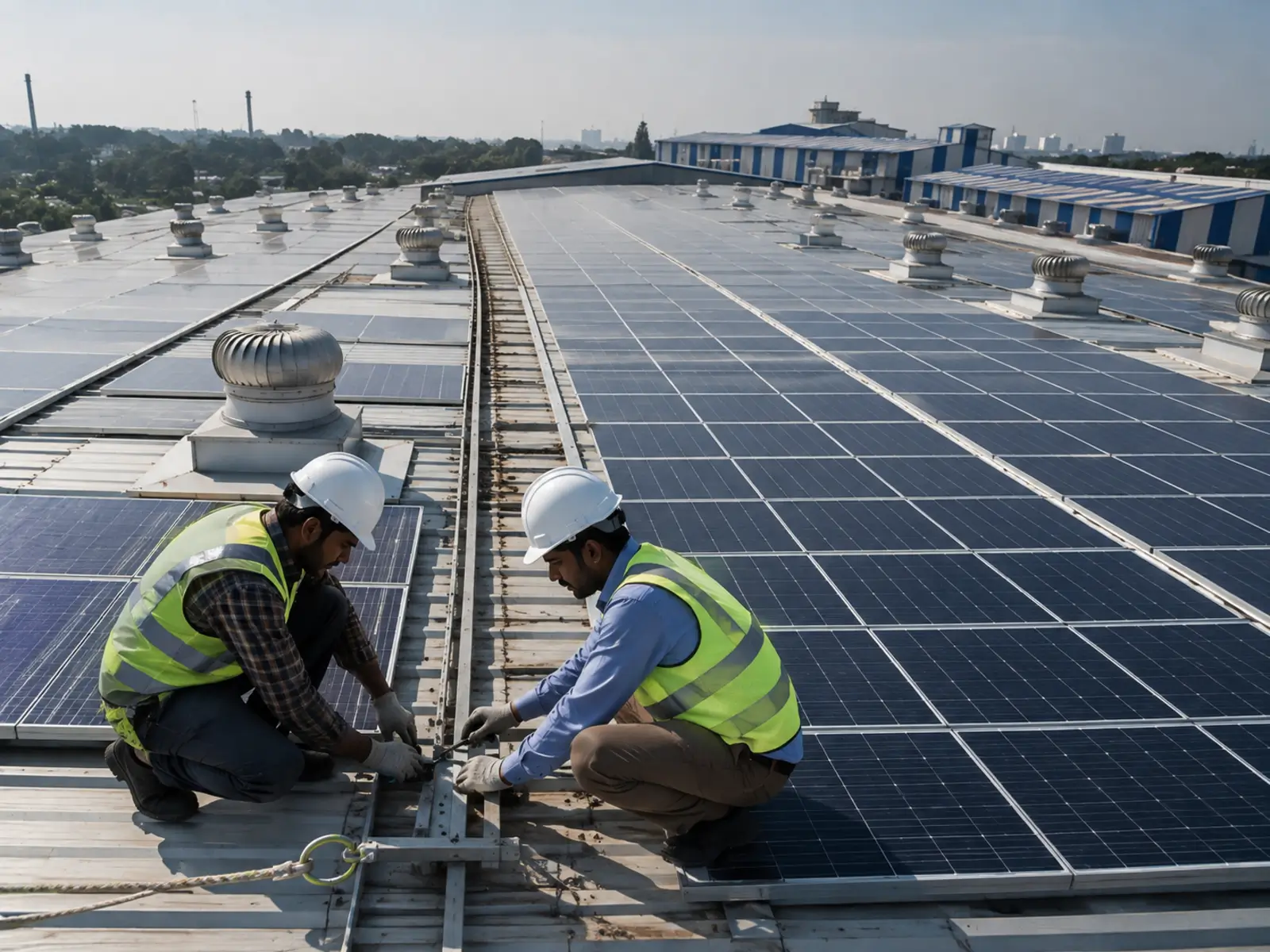
The 375 kW system Energium installed delivered a fast, damage-free installation while the facility continued operating around it. Nearly 700 solar modules went up on a 30-foot-high rooftop, a height that normally makes manual handling both slow and risky.
Consider what a typical rooftop of this height usually demands. Workers carry panels up scaffolding, one at a time, exposed to wind and fatigue for days. Energium approached this differently, treating the height itself as the engineering problem to solve before installation ever started. That decision shaped everything else about how this project ran.
What Makes Industrial Solar Power Solutions Different on High-Rise Rooftops?
Industrial solar power solutions on high-rise rooftops require handling systems built for the site, not standard installation methods borrowed from ground-level projects. On this project, Energium introduced a custom top-open lifting cage compatible with all module pallets, paired with crane-assisted installation.
This eliminated manual handling risks completely. Imagine lifting 700 modules by hand up a 30-foot structure while a facility runs at full capacity below. The margin for error is thin, and a single dropped panel means cost, delay, and safety exposure.
The crane-and-cage method removed that risk from the equation entirely, which is the kind of decision that separates engineered solar EPC solutions from a standard rooftop install.
Why Did Zero Micro-Cracks Matter for This Installation?
Zero micro-cracks mattered because even hairline damage to a solar module can quietly reduce its output for the next 25 years without ever showing up as a visible fault. A cracked cell degrades faster and generates less power, and that loss compounds year after year.
Also, many changed when the lifting cage replaced manual carrying. Every module reached the roof without contact stress, without drops, and without the small bumps that typically happen during manual handling.
Full perimeter safety was maintained throughout, and the result was 700 modules installed with uncompromised performance and total structural integrity. That’s a detail a lot of industrial solar power solutions skip past, right up until the output numbers start falling short years later.
How Fast Can a Commercial Solar Power Solution Actually Be Installed?
A well-engineered commercial solar power solution can be installed far faster than most businesses expect, without cutting corners on safety. On this project, the entire rooftop module installation was completed in just 3 days.
That speed matters for a facility running continuous shifts, where every day of disruption has a real cost. Optimized handling efficiency meant the crew wasn’t fighting the height or the pallet logistics, they were executing a plan built specifically for this roof. Reading about how Energium’s EPC process maximizes commercial solar returns shows this isn’t a one-off. Fast, safe deployment is what happens when the engineering work gets done before the crane ever arrives on site.
What Can Other Businesses Learn From This Case Study?
Other businesses can learn that guaranteed reliable energy output starts with how a system gets installed, not just what equipment gets used. A rooftop’s height, layout, and access constraints should shape the installation method, not the other way around.
This project sits alongside other Energium installations across Erode and Perundurai, including smaller rooftop projects built for different site conditions. Browsing the full project portfolio shows how commercial solar power solutions get adapted for each site’s specific constraints, whether that’s rooftop height, load pattern, or shift schedule.
If you’re evaluating solar for a similar facility, running your numbers through a solar calculator is a good starting point, and reading through how data-driven solar plant design improves ROI is worth doing before comparing installation approaches.
Conclusion
This case study makes one thing clear. Industrial solar power solutions succeed or fail based on decisions made before installation starts, not during it. The custom lifting cage, the crane-assisted approach, and the focus on zero micro-cracks all came from treating a 30-foot rooftop as a unique engineering challenge instead of a standard job.
The result speaks for itself: 700 modules, 3 days, zero damage, and a system built for decades of reliable output. That’s what commercial solar power solutions should deliver every time, not just on paper, but on a working facility floor. Contact Energium to see how the same engineering approach applies to your facility.